Capote How to play Truco at the bar
Live in Capote 1.0 — team tricks, raises, and silent signals.
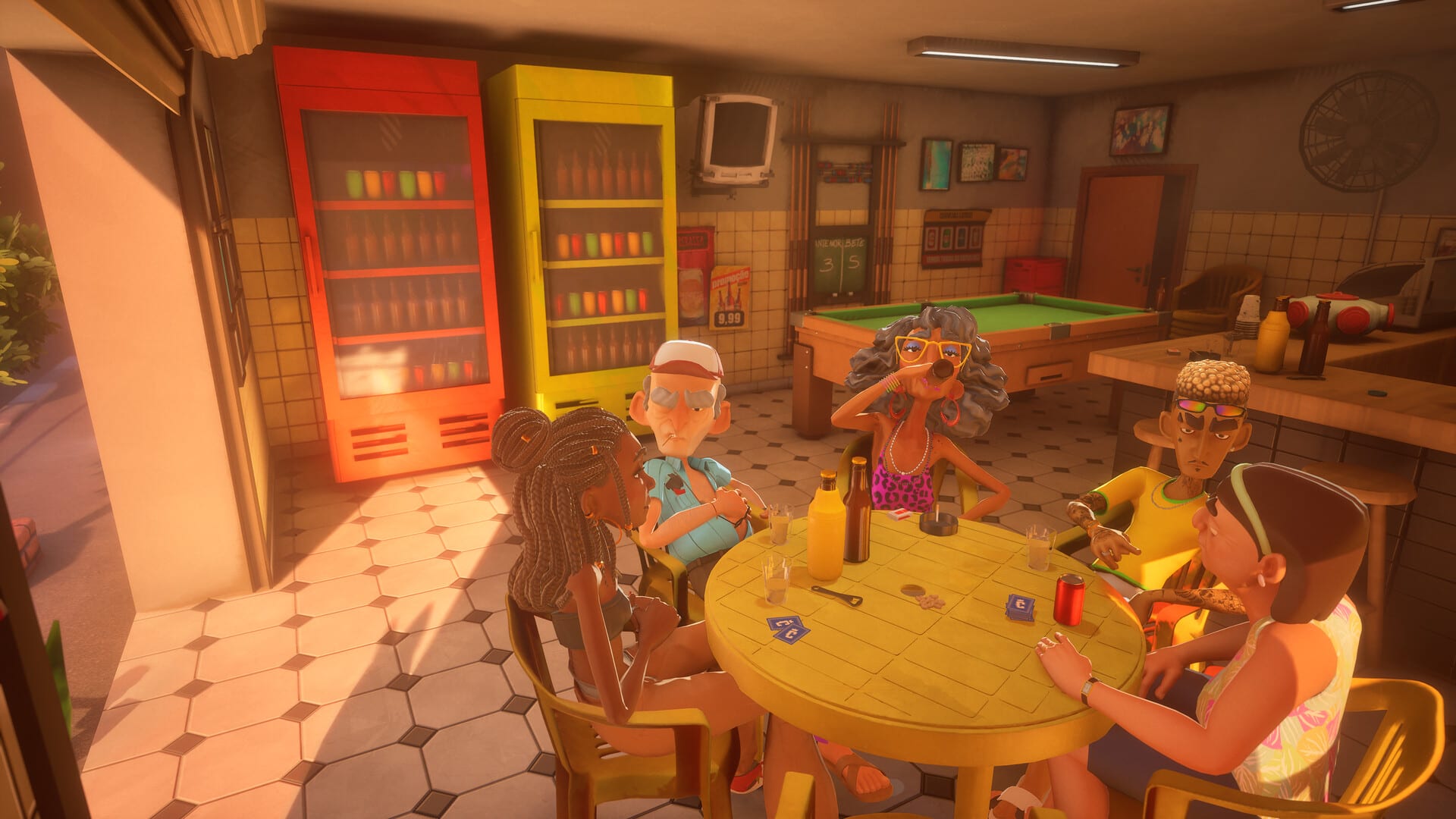
Truco is no longer a placeholder. Capote 1.0 (August 20, 2026) ships the mode the community asked for through Early Access: a team trick-taking table with Brazilian regional variants and emotes used as partner signals. This guide covers what Luski and the Steam page have confirmed, and it stays honest about rules that have not been published as a full public manual.
If you are new to the whole game, start with Getting Started for Classic Capote. Truco is a different sport. You still sit in the same bar, but you are not bidding an exact trick count for virtual shots. You are scoring a team match, raising the hand, and reading people.
Formats that shipped
Coverage of the 1.0 launch and the live Steam store agree on three table shapes:
- 1v1 — a duel. Useful for learning the raise ladder without a partner to misread.
- 2v2 — the social default. Two pairs, signals, and the classic argument about whether someone looked at the wrong emote.
- 3v3 — a full six-seat table. This is the format that matches Capote’s 1–6 player DNA the most closely.
Steam copy also mentions playing solo or in pairs with bots filling empty seats. Treat bots as practice, not as a substitute for a loud 2v2 with friends.
What Truco is at this bar
Brazilian Truco is a trick-taking game where reading the table matters as much as the cards. Bluffing is built in. Someone always accuses someone else of cheating, and the table keeps playing. Capote’s version sits in the same neighborhood bar as Classic Capote and Betejack. You pick a team, you play for points, and you keep the room loud.
Confirmed flavor from Luski and press:
- Regional styles — Truco is not one national rulebook. Paulista, mineiro, gaúcho, and other state variants disagree on manilhas, scoring, and how a raise works. Capote’s 1.0 pitch is that you can pick rules closer to how your table already plays, instead of forcing one São Paulo standard on everyone. The studio has not posted a complete public matrix of every regional toggle on day one. Until that list is official, do not memorize a fan-made ranking as if it were in-game text.
- Raises — a team can call truco to raise the value of the current hand. The other team can accept, raise again, or fold. Traditional ladders use names like six, nine, and twelve. Capote maps those calls to emotes so bots and silent tables can still play.
- Signals — in pairs and trios you pass information with emotes, the digital version of the grimace and the eyebrow at a real bar. It is not confirmed whether every rival sees every gesture, whether there is a per-hand cap, or whether each character has a unique animation. Custom lobbies may or may not let you disable signals; Luski has not published that toggle list.
How to sit down without looking lost
- Update to 1.0 on Steam. If the store page still says Early Access, you are on a stale client.
- Open the mode list and pick Truco, not Classic. Classic still uses the bid-your-tricks loop described in Betting Strategy.
- Choose 1v1 for a first night if you have never played Truco in real life. Move to 2v2 as soon as you have a friend who will not throw the match on purpose.
- Agree on a regional ruleset before the first deal. If your group grew up on mineiro rules, do not silently start a paulista queue.
- Bind or learn the signal emotes in the lobby. A partner who never signals is playing a different game from a partner who signals every hand.
- Use voice chat with lip sync if your table wants noise. Use emotes if you want parity with bots or a quieter stream.
What this wiki will not invent
We will not publish a fake manilha order, a fake point target, or a fake ranked ladder. Those details change by region and Luski has said the full regional list would be shown in the client. When an official patch note names a ruleset, it will land on the Truco mode page and Version History.
Classic special cards from the Special Cards Catalog are a Classic Capote toy. Do not assume they exist in Truco. Betejack uses its own power draft. Three modes, three rule families, one bar.
Table manners that actually win
- Call a raise only when you can stand the fold. A theatrical truco with a dead hand is content for the bar, not a winning plan.
- Do not dump your entire signal vocabulary on the first trick. Opponents learn your tells as fast as your partner does.
- If you are 3v3, assign who is allowed to raise. Six people talking over each other is the joke of the mode, not the strategy.
- Warm up in Classic if you only wanted chaos cards. Switch to Truco when you want team chaos.
Where to go next
- Truco mode overview — status, formats, and links.
- Version 1.0 notes — beach bar, pool, YouTube player, review challenge.
- The Bar — venues, Mel the dog, music.
- Pool minigame — what to do while the lobby fills.
- Modes Hub — Classic vs Betejack vs Truco.
Frequently Asked Questions
Quick answers to the most common questions.
Is Truco available in Capote right now?
Yes. It shipped with version 1.0 on August 20, 2026. Earlier wiki pages that called it upcoming are outdated.
Can I play Truco 3v3?
Yes. Luski built 1v1, 2v2, and 3v3, so a full six-player table is a supported format.
Do I need voice chat to signal my partner?
No. 1.0 uses emotes for partner signals. Voice chat with lip sync is still there for the bar atmosphere.
Which regional Truco rules are in the game?
Multiple Brazilian regional styles are part of the 1.0 pitch. Luski has not posted a complete public list of every toggle. Pick the ruleset in the client and treat in-game text as canonical.