Capote special cards catalog
Eleven sabotaging cards, every counter, and the rules they quietly bend.
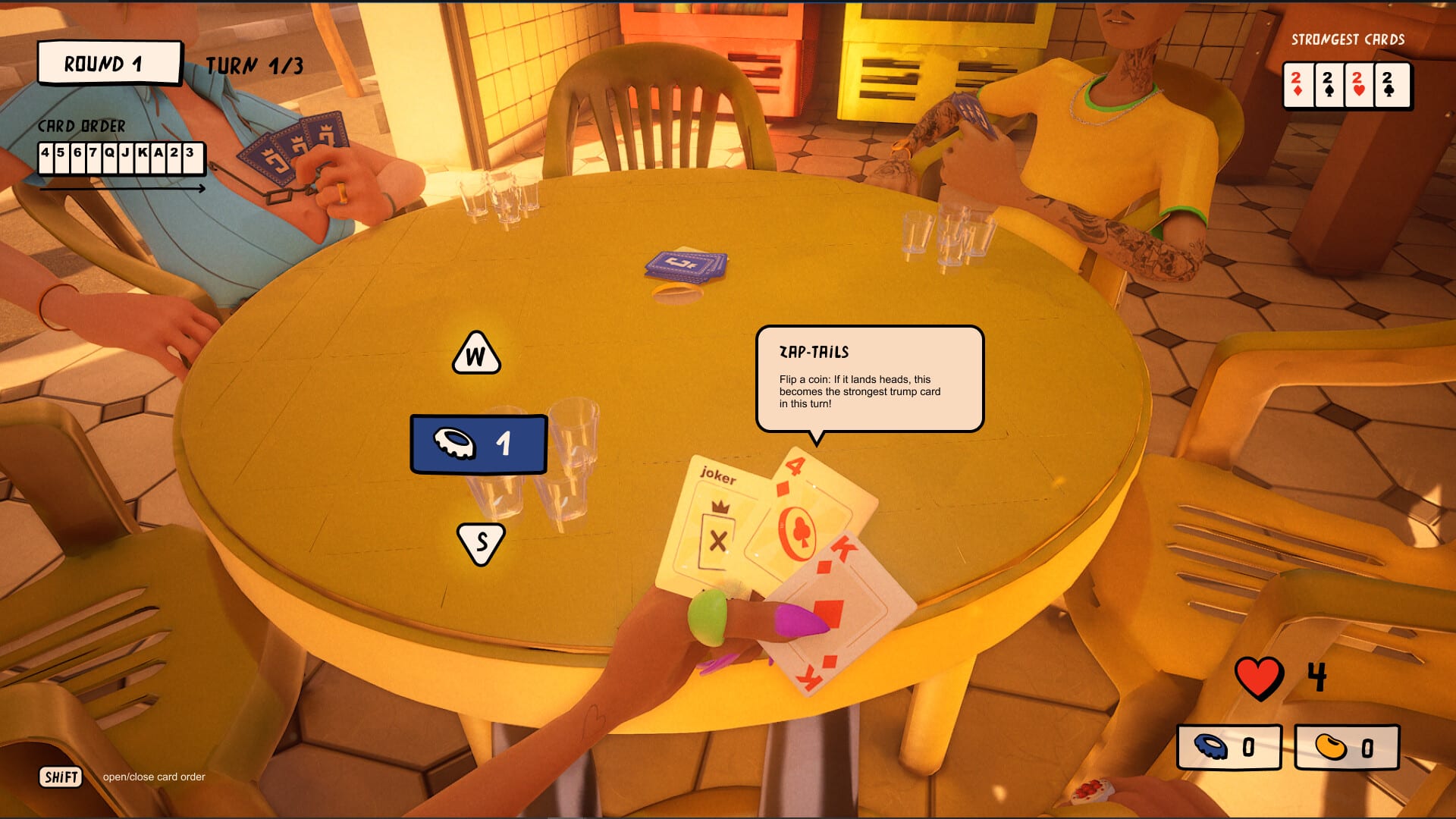
Capote ships with eleven special cards in the current Early Access build. They are the source of almost every swing moment at the table — and the most common reason a “sure” bid falls apart. This catalog lists each card, its in-game effect, and the meta call for playing it.
How special cards work
Special cards are played just like normal cards. When one resolves, the table may pause for a modal prompt so the affected player can choose a target. If the prompt is declined or the effect is mandatory, the card resolves automatically and play resumes.
Special cards do not consume an extra turn. They are still a single card played from your hand, but the effect replaces (or augments) the trick resolution.
Full card list
Force High
- Effect: The next player in turn order must play their highest legal card. If they have no legal card, they pass.
- When to play: Late in a round when the next player is about to win their bid with a single high card. Pair with a known low card of your own to deny the win.
- Counter: Hold your high cards until after Force High resolves. You will be forced to play them — but in a useful order.
Reverse Order
- Effect: Turn order flips for the rest of the round. If play was left-to-right, it now goes right-to-left.
- When to play: When the player immediately after you has been dominating tricks. The flip punishes their hand position.
- Counter: Track which player is most dangerous to your position. If you are second in the new order, plan to play your weakest cards first.
Shuffle the Deck
- Effect: Discards the current trick, reshuffles the played cards, and continues the round.
- When to play: When the trick is about to be won by a player one trick short of their bid. Reshuffling denies them the win.
- Counter: Play Shuffle the Deck before your high card to deny it back. Yes, you can Shuffle a Shuffle — the game resolves both effects and the round continues.
Steal a Trick
- Effect: Take any trick already won this round and add it to your own count.
- When to play: When you are zero or one trick away from your bid and another player has accumulated a healthy trick pile. Use it on a low-impact trick to avoid retaliation.
- Counter: Spread your wins across many players. If no single opponent has more than one trick, Steal a Trick becomes weaker.
Pass the Buck
- Effect: Move your next required card choice to the player after you. You pass on playing; they must play twice.
- When to play: When you are out of playable cards and want to force the next player to overextend.
- Counter: Hold a Pass the Buck to chain. Two consecutive passes create a chain reaction that can empty the table of cards early.
Mirror Match
- Effect: The next card played is mirrored — if it is high, you play high; if low, low. The mirror judge is the second-highest available card.
- When to play: When you suspect the next player will play a card that you can comfortably mirror and still win the trick.
- Counter: Wait until the round after Mirror Match is played. Its effect does not stack.
Show Your Hand
- Effect: Forces a target player to reveal their entire hand to the table.
- When to play: When you suspect a target is bluffing a high bid. Revealing trash gives you free reign on the round.
- Counter: This card reveals but does not change hands. Use the information to plan the rest of the round.
Double or Nothing
- Effect: Doubles the shot penalty for the next missed bid (applies to the bidder, not the player who played Double or Nothing).
- When to play: When an opponent who is one shot from capotado is about to bid high. Stack the penalty.
- Counter: Drop to a 0 bid. If the penalty is doubled but you bid zero, you cannot miss by more tricks than you can possibly win — usually a free round.
Reveal and Steal
- Effect: Reveal the target player’s hand, then take one card from it and add it to your hand for the rest of the round.
- When to play: Late game when the target is close to their bid and you need a specific card to flip the round.
- Counter: Hold a Reveal and Steal of your own. The tables that run this card the most also run the counter — games devolve into mutual theft.
Skip Turn
- Effect: The target player misses their next turn.
- When to play: When the target is about to play the winning card of a critical trick. The skip wastes their high card.
- Counter: Play your high cards before your expected skip turn. Skip Turn cannot go back in time.
Final Trick Swap
- Effect: At the end of the round, swap your trick count with the target’s. Mandatory.
- When to play: When you are about to miss your bid by one and your target is about to overperform by one.
- Counter: Hold your high cards so the swap is less damaging to your final count.
Using special cards together
The strongest plays in Capote chain two special cards. The classic chain is Show Your Hand followed by Steal a Trick — you know the opponent’s hand, then steal the trick they were counting on. Mirror that with the Betting Strategy guide to understand when to hold these cards back for the perfect moment.
Special cards and Betejack
In Betejack, special cards are replaced with roguelike power modifiers. The Betejack mode does not use the classic Capote special cards directly, but the meta ideas — read the table, hold your high cards, punish late-round bids — still apply.
Patch sensitivity
Special card text and effects have shifted in several Early Access patches. Always check the Version History before trusting older guides.